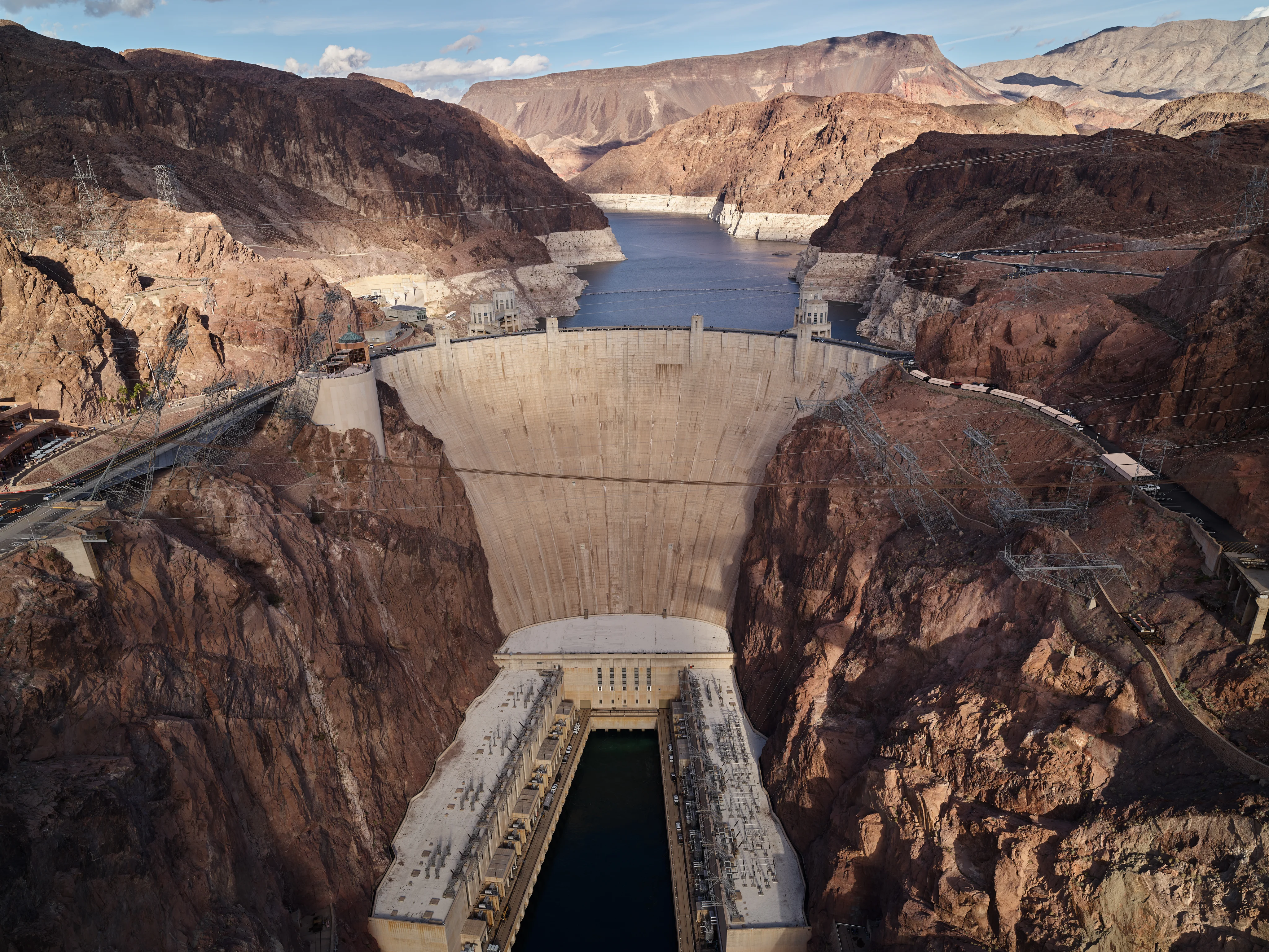
Hoover Dam Engineering & Design (1935)
Conceived during the New Deal as both infrastructure and symbol, Hoover Dam embodies a holistic federal design approach in which engineering, architecture, art, and landscape were treated as a single, unified project. Its sweeping concrete forms, carefully proportioned intake towers, sculptural details, and crafted public spaces transformed a massive hydroelectric structure into a landmark of American modernity and civic ambition.
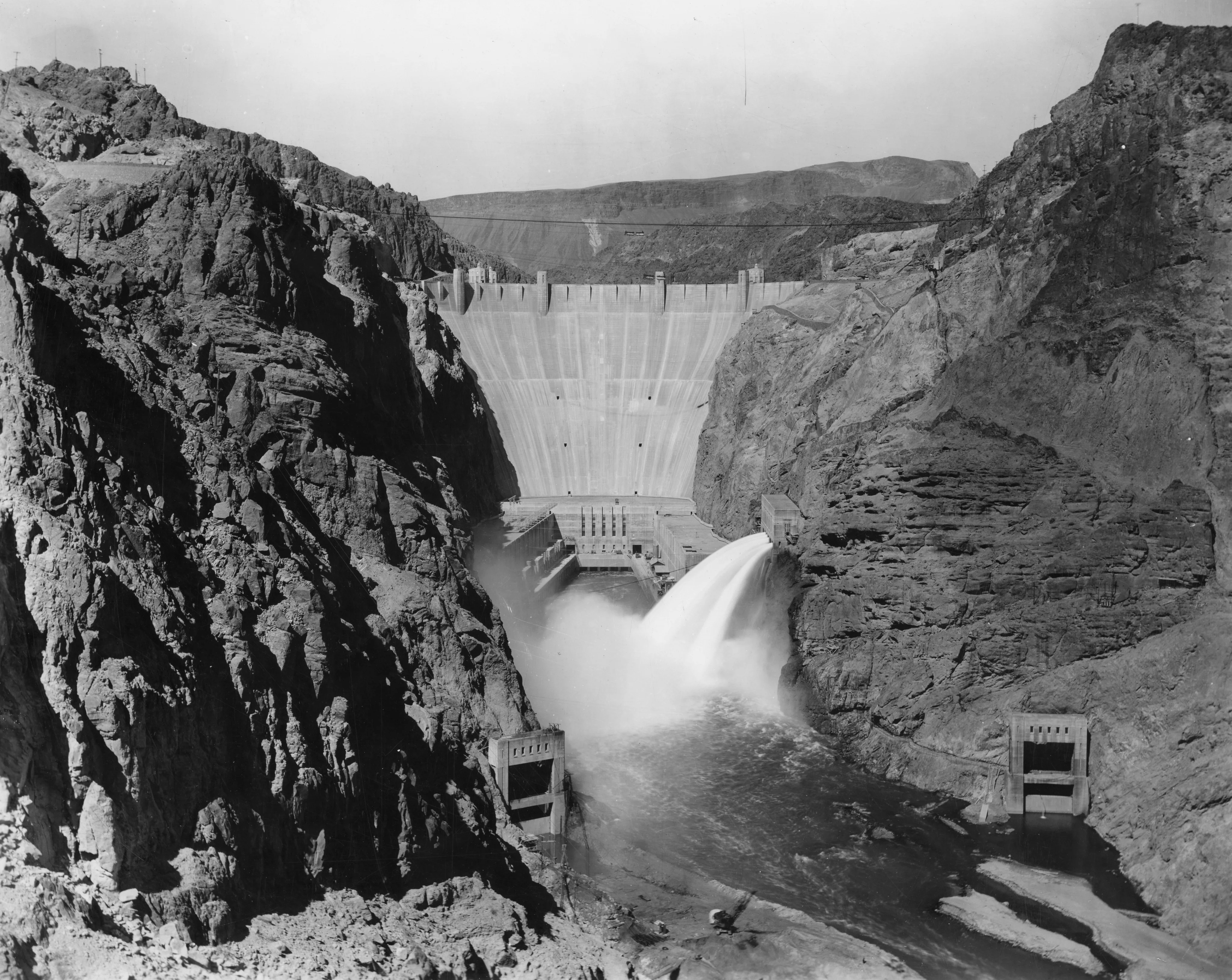
Hoover Dam Engineering & Design (1935)
Conceived during the New Deal as both infrastructure and symbol, Hoover Dam embodies a holistic federal design approach in which engineering, architecture, art, and landscape were treated as a single, unified project. Its sweeping concrete forms, carefully proportioned intake towers, sculptural details, and crafted public spaces transformed a massive hydroelectric structure into a landmark of American modernity and civic ambition.
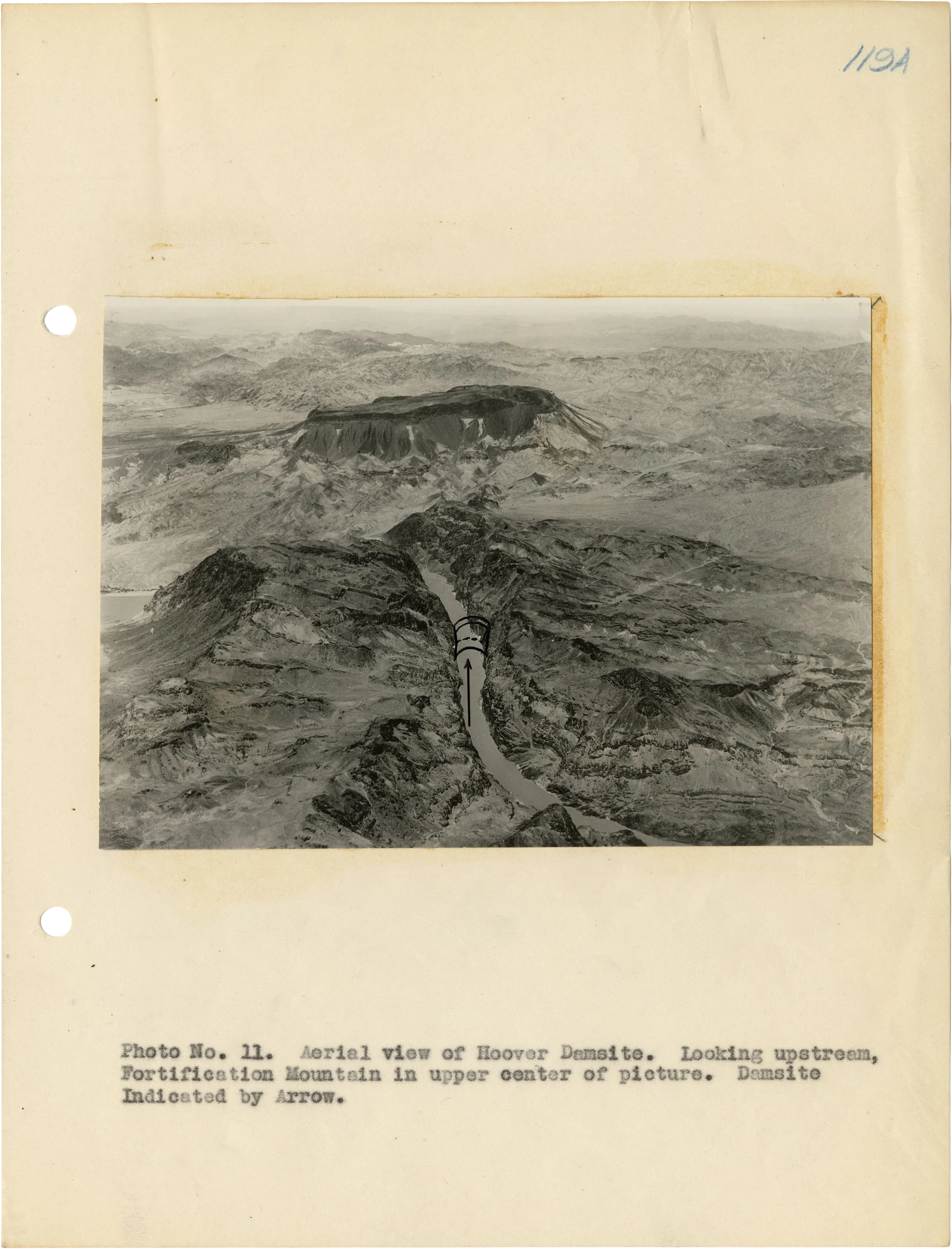
Aerial view of the Hoover Damsite.
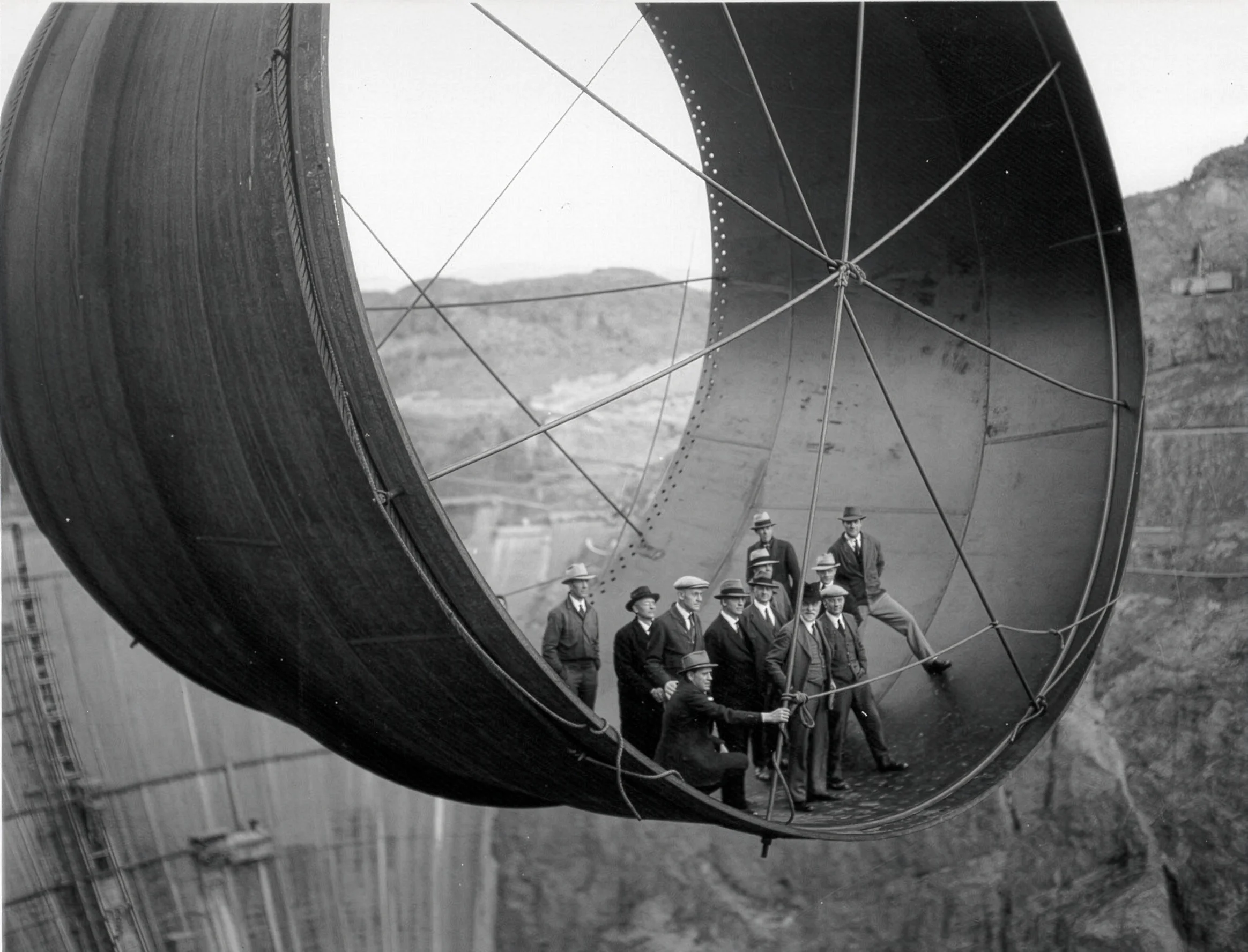
Officials ride in one of the penstock pipes of the soon-to-be-completed Hoover Dam. 1935
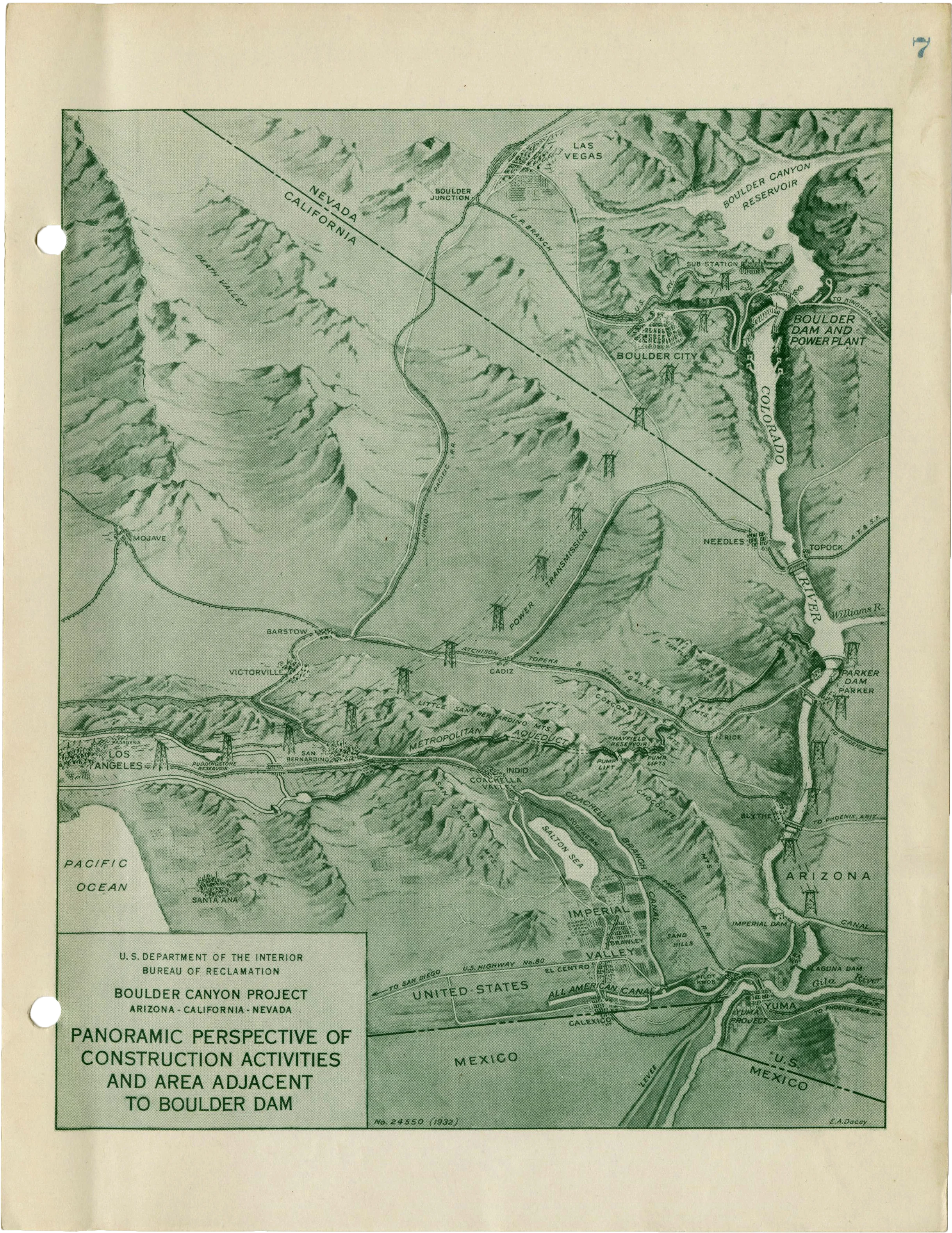
Panoramic Perspective Map of the Construction Activities around Hoover Dam aka Boulder Dam.
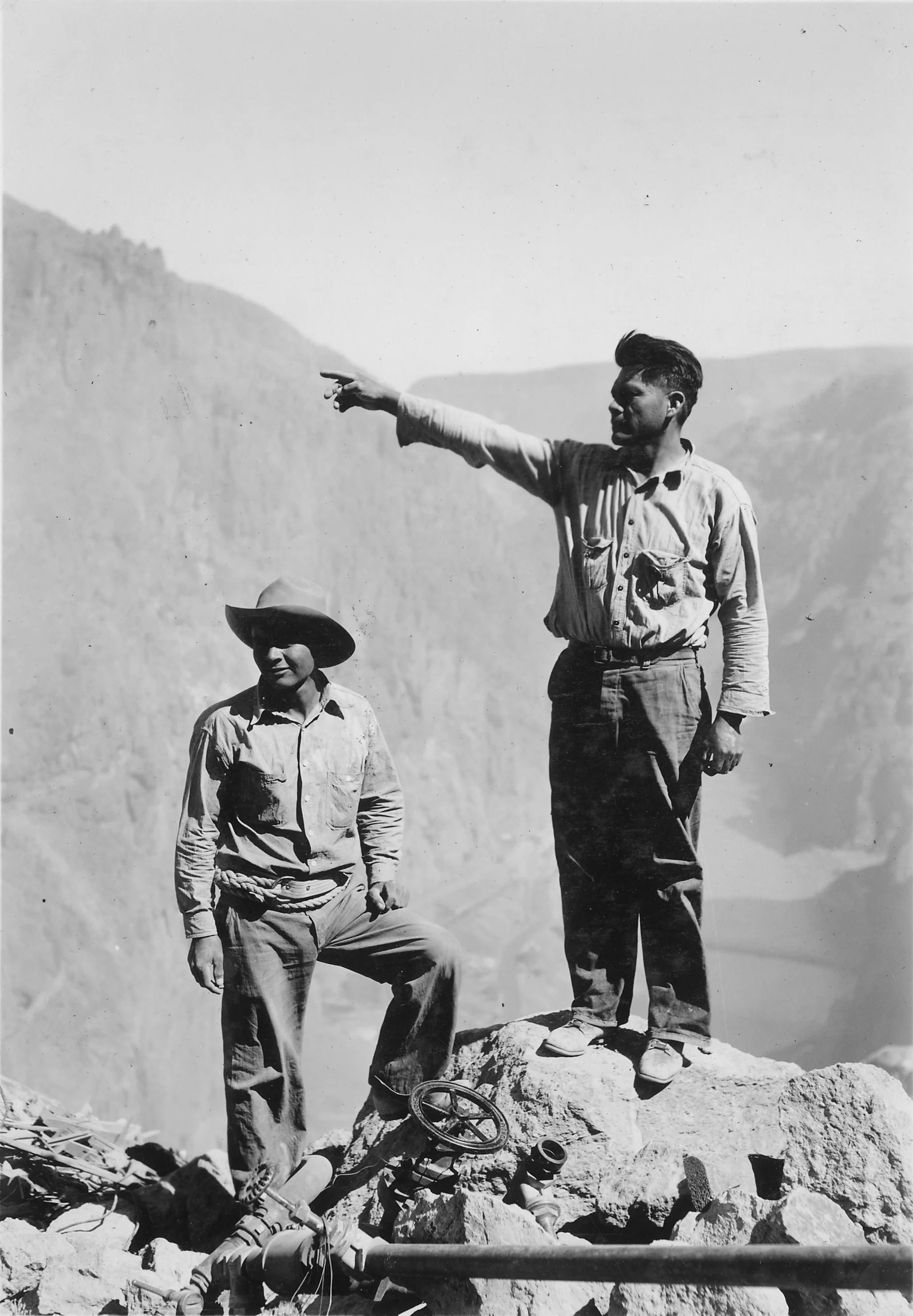
Apaches employed as high-scalers on the construction of Hoover Dam.
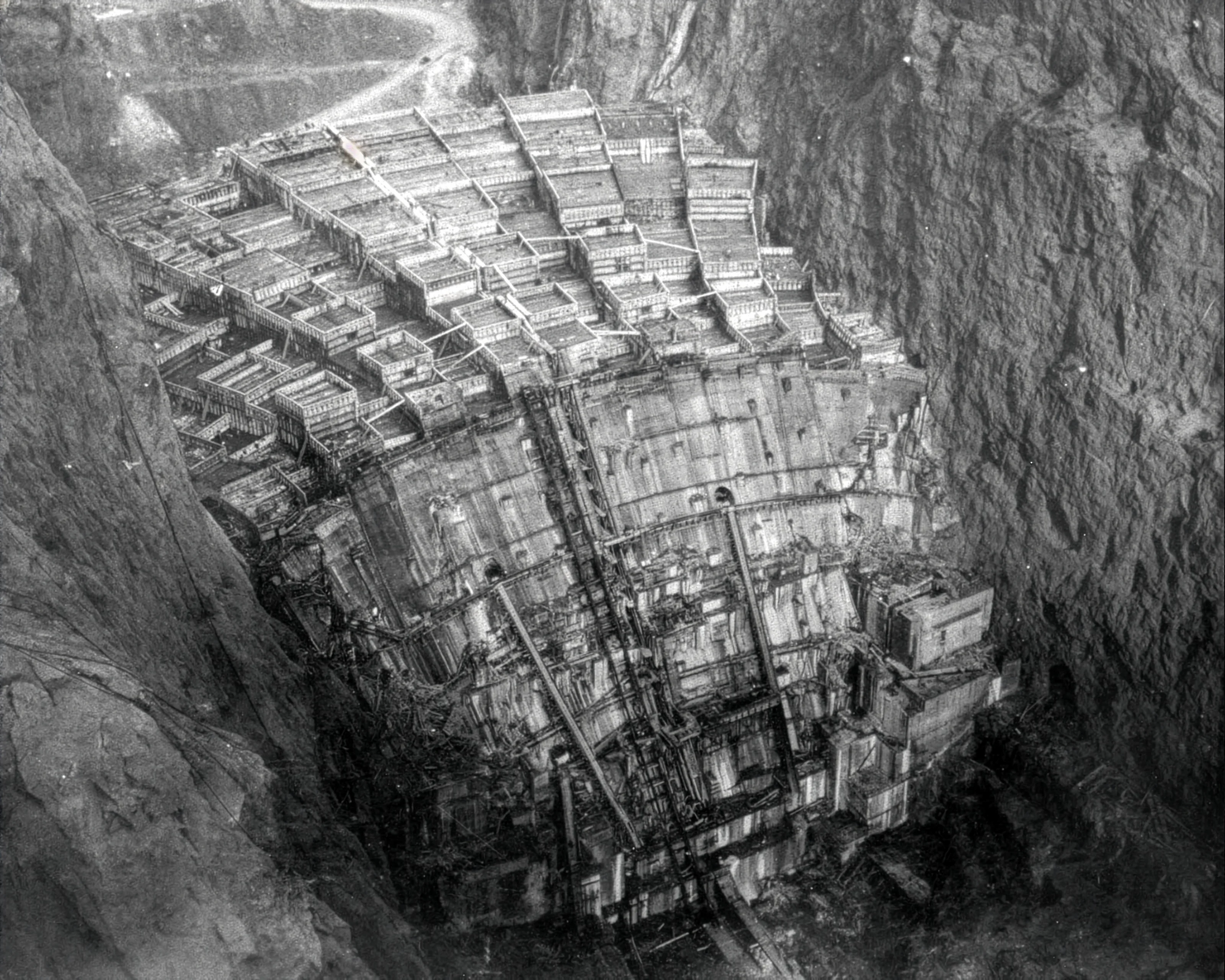
Concrete being laid to form the dam, c. 1931-1934.
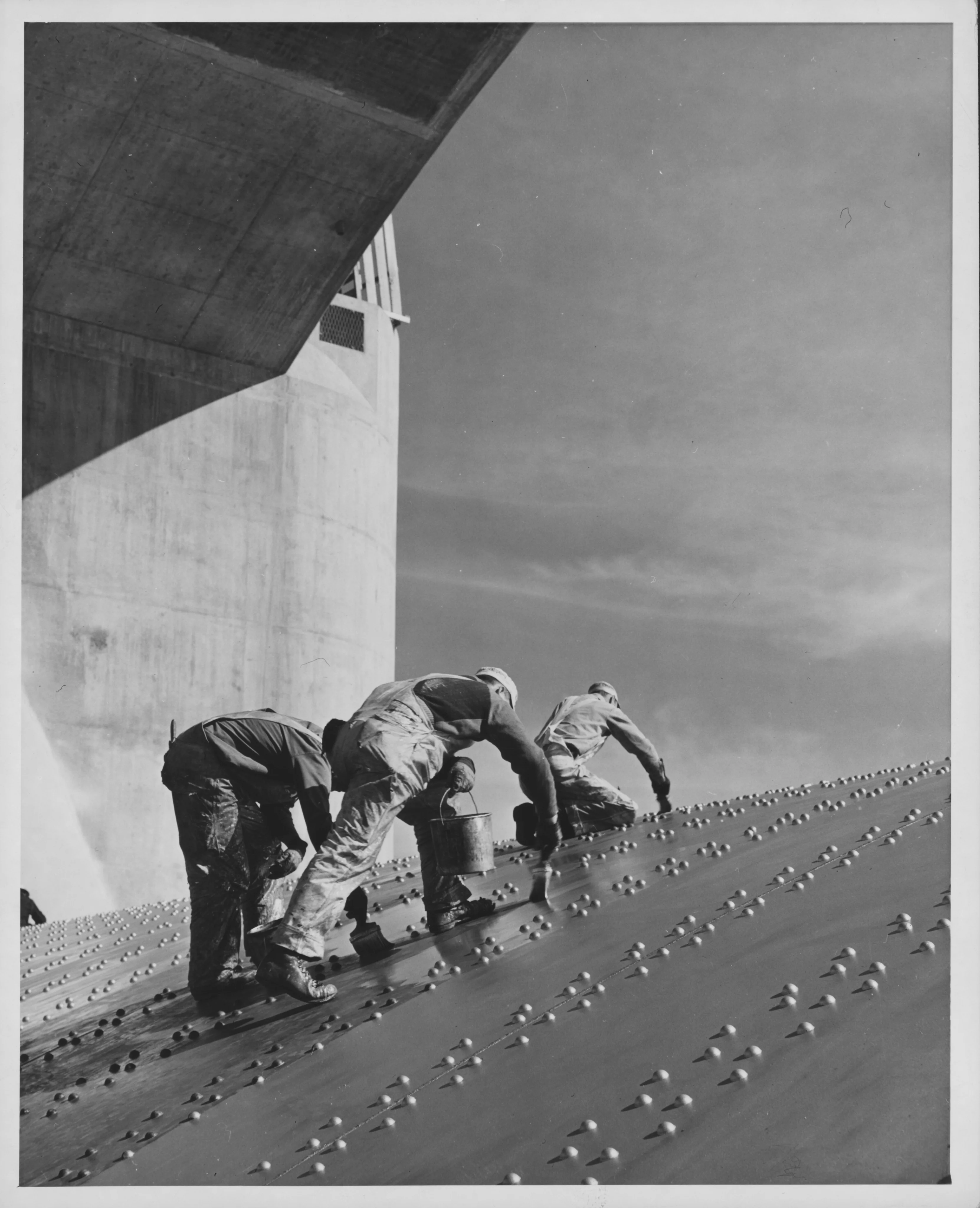
Workers painting Hoover Dam's riveted steel spillway, c. 1936–1946.
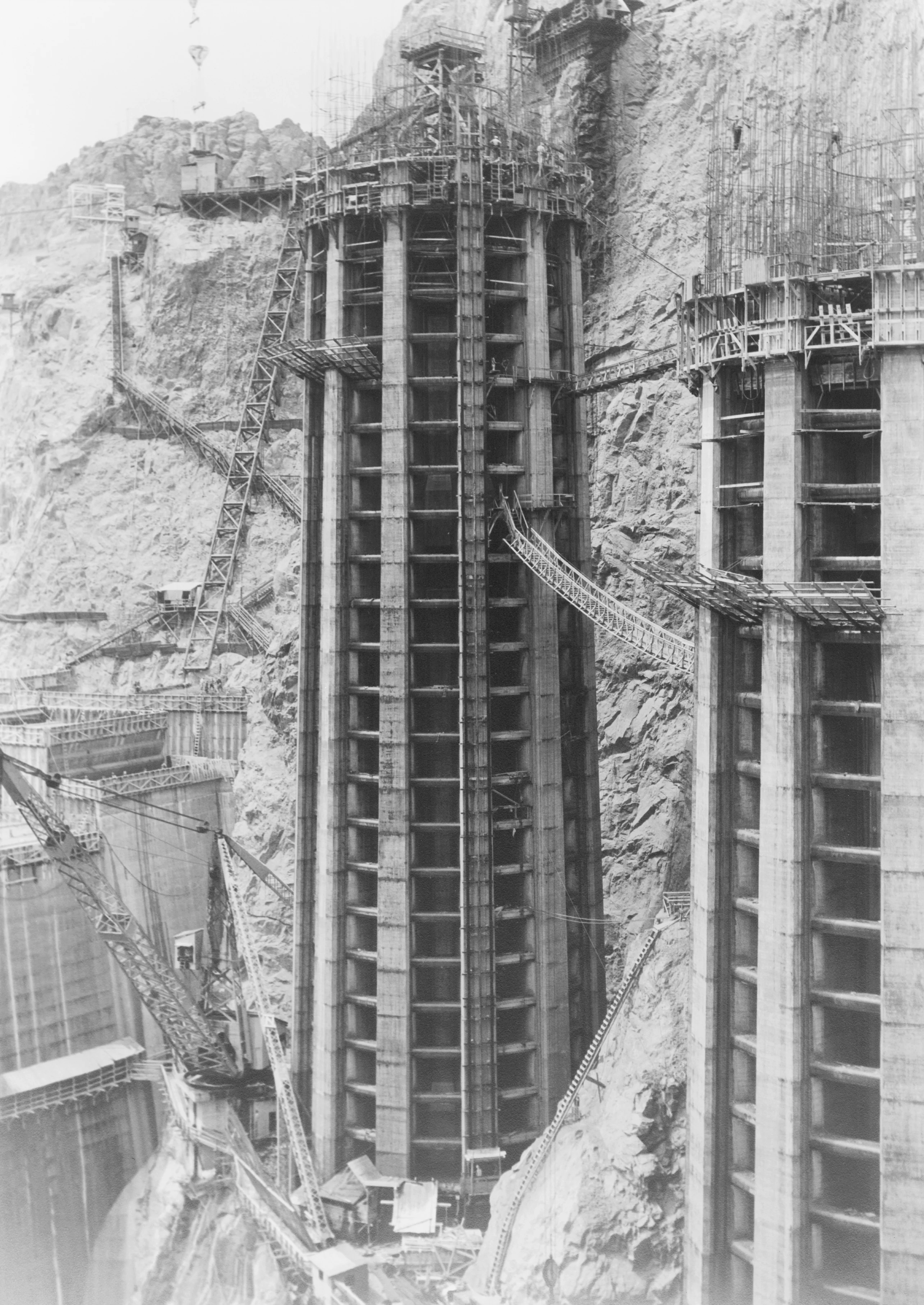
The Nevada intake towers at Boulder Dam, Ben D. Glaha, 1934
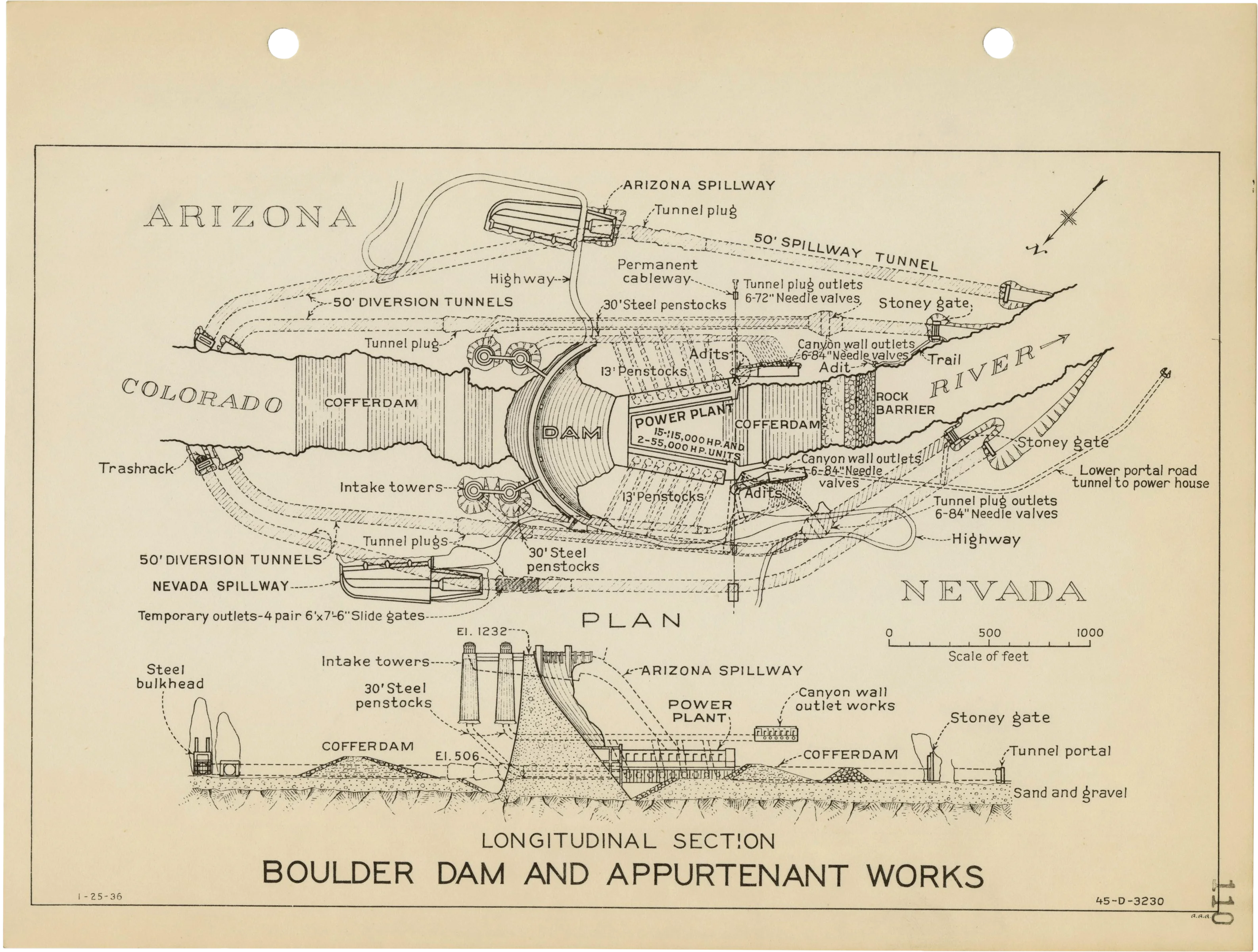
Drawings of the structure of the Hoover Dam, 1936
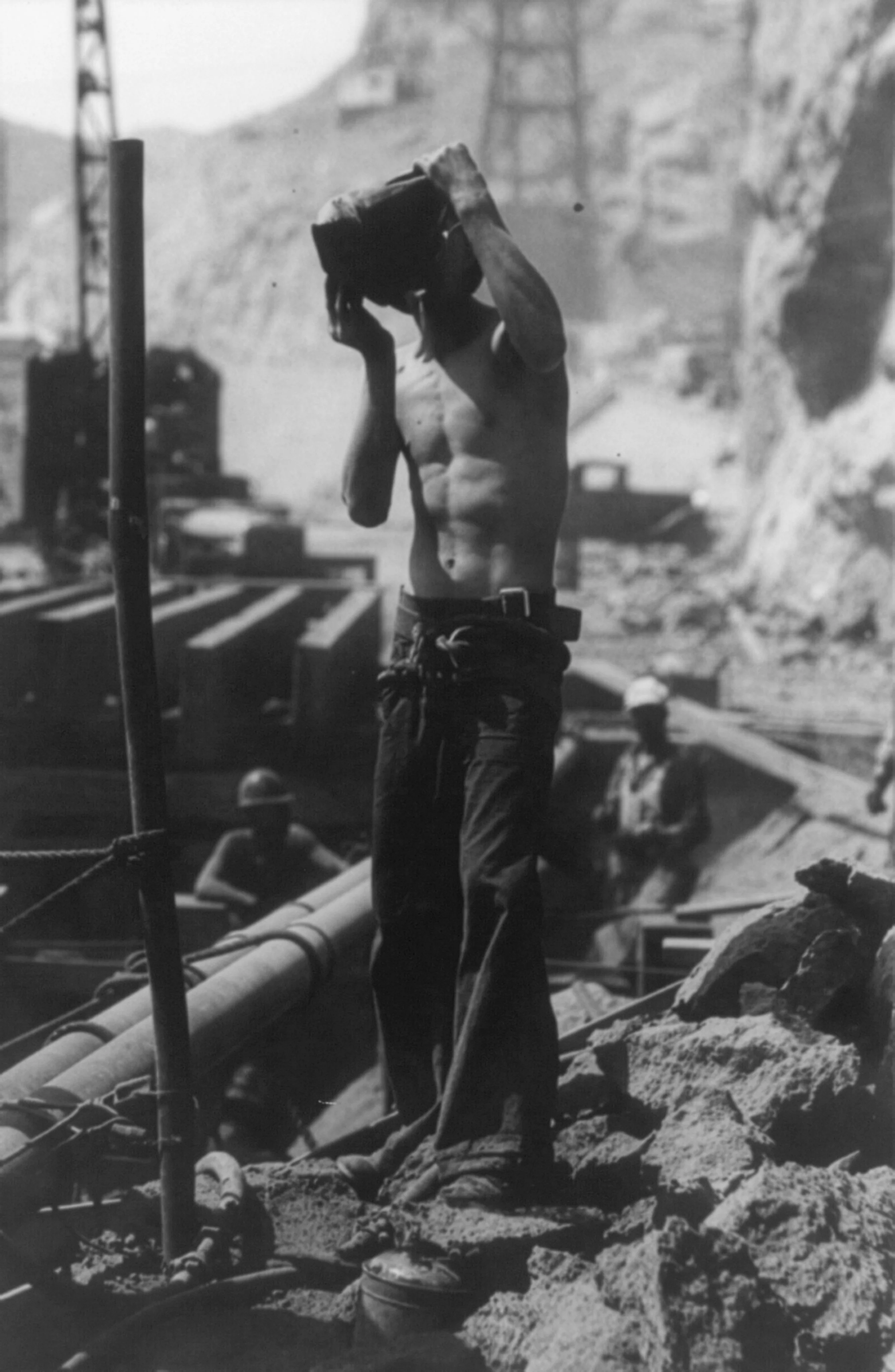
Nevada--Workman with water-bag, during construction of Boulder Dam, Ben D. Glaha, 1934
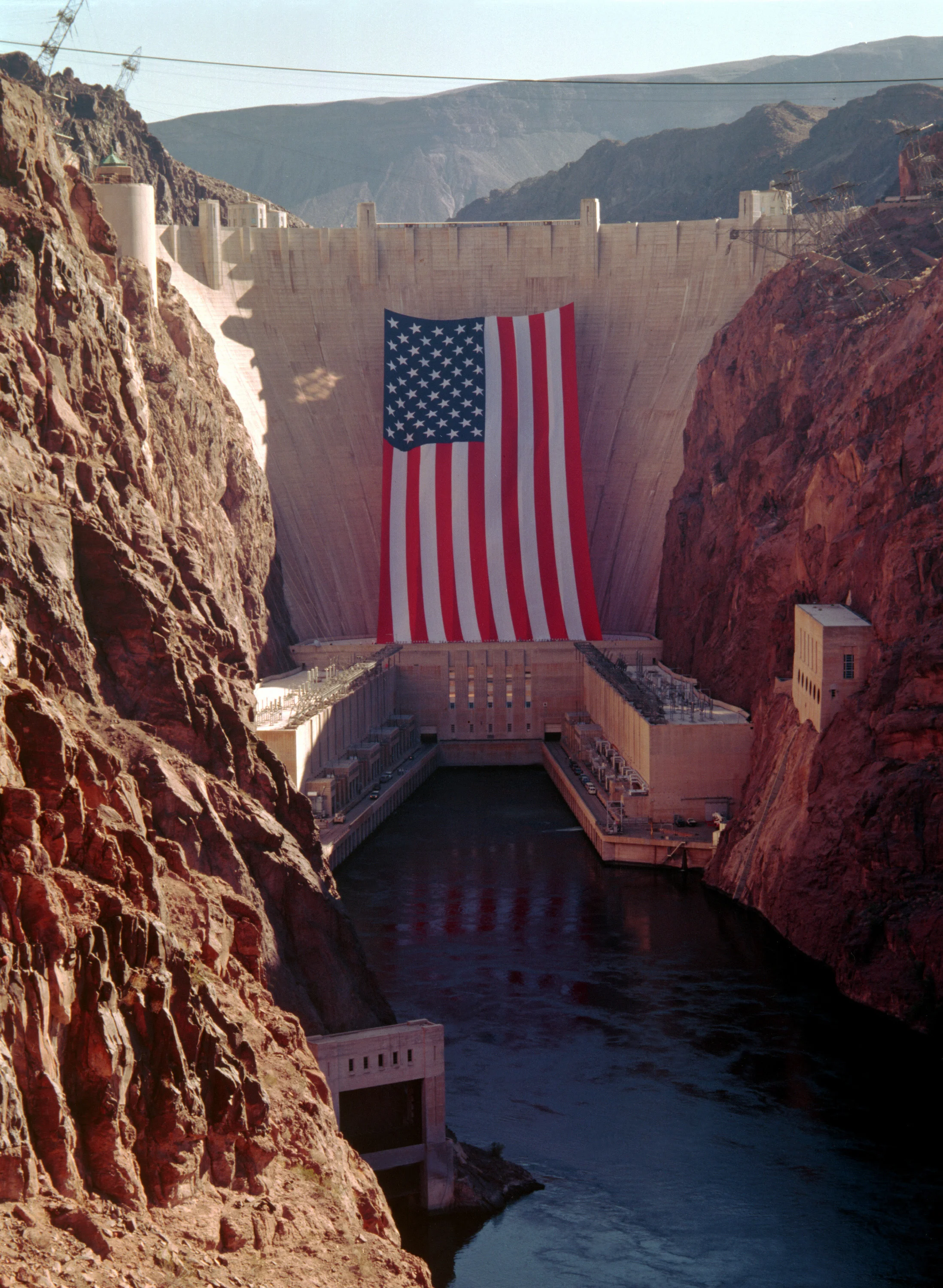
A 3,000-pound American flag covered Hoover Dam for the 1996 Olympics.
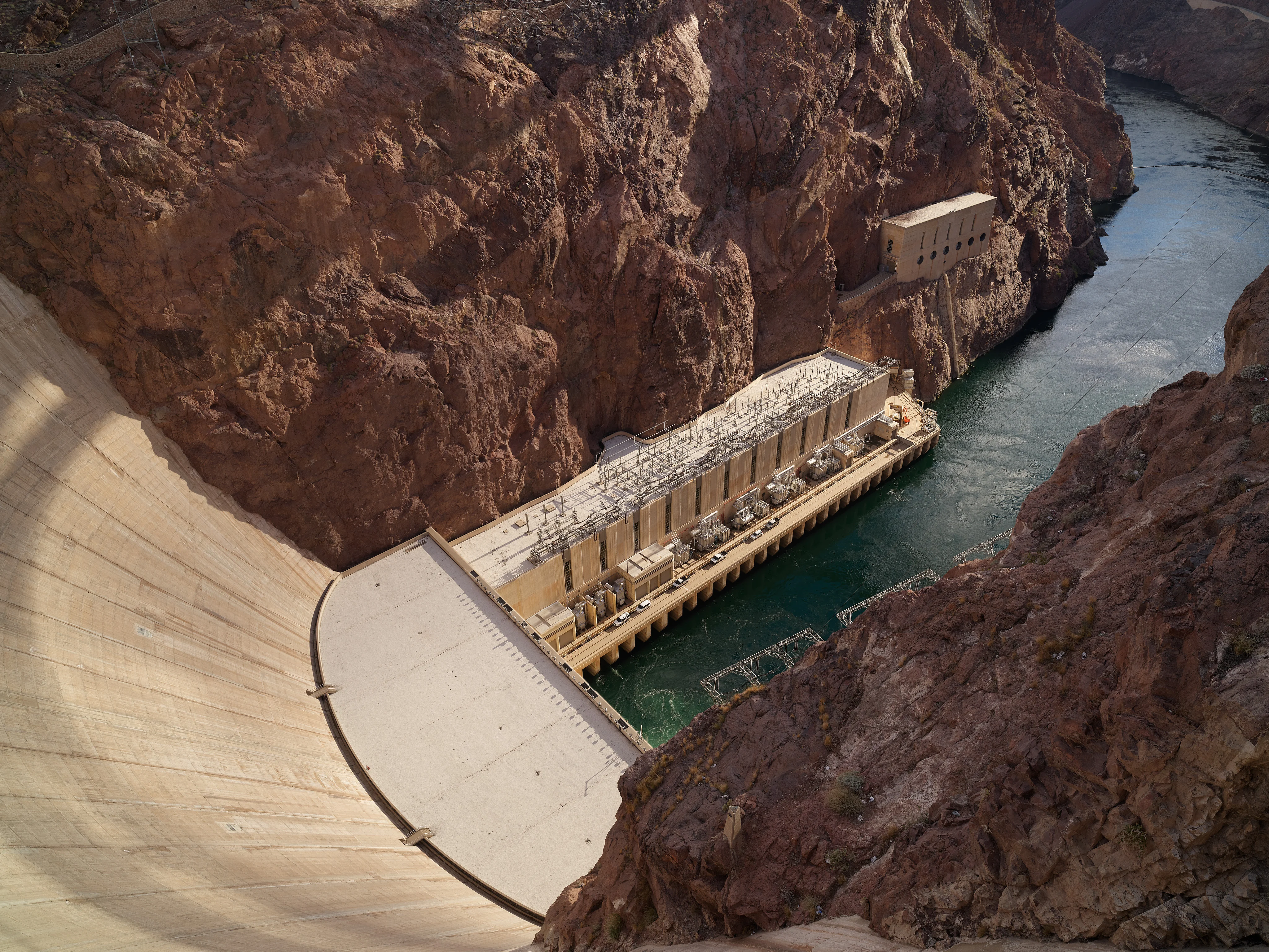
View down at the Colorado from Hoover Dam. Photo by Carol M. Highsmith
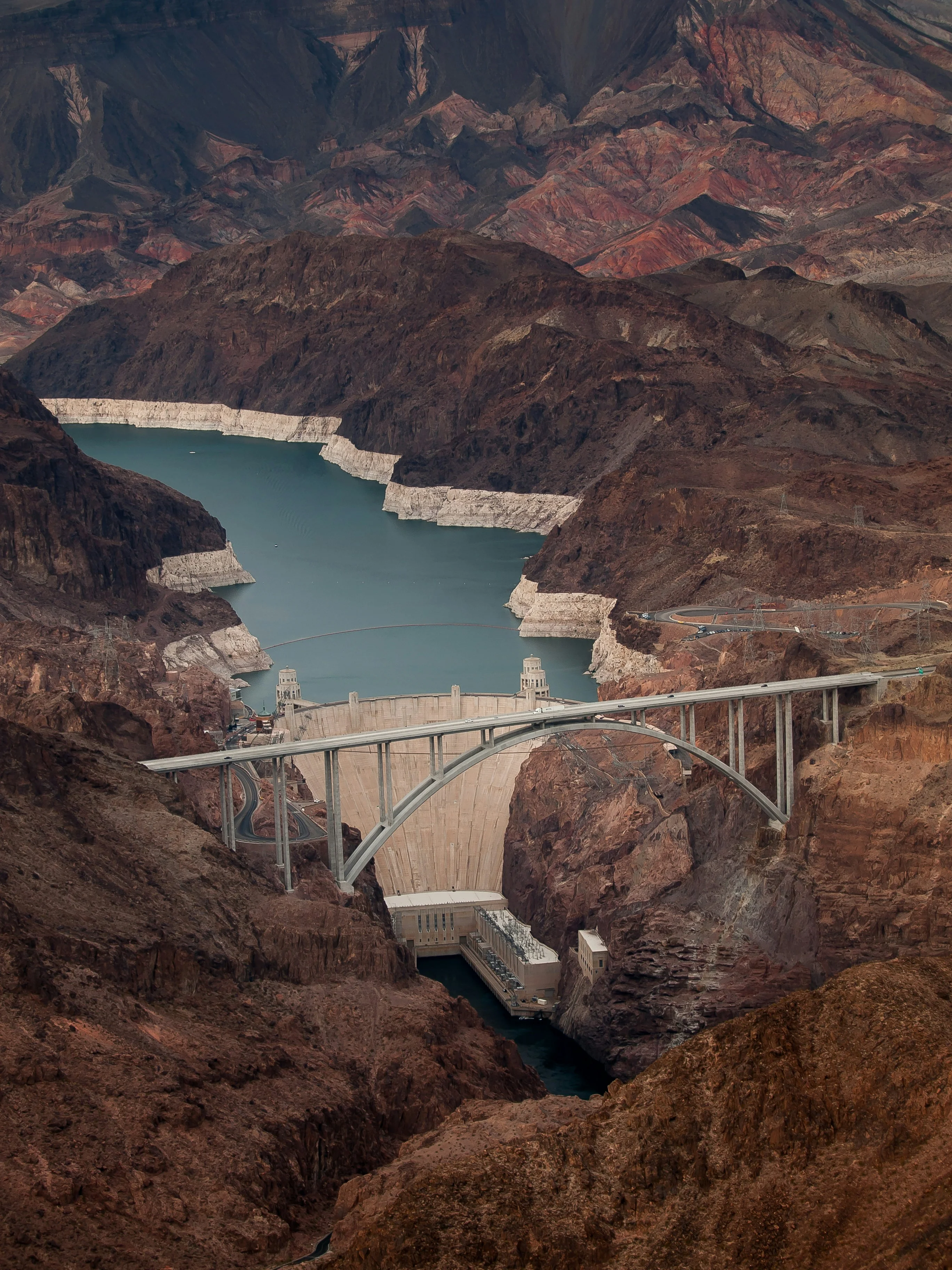
Ariel of the Hover Dam and the Mike O'Callaghan–Pat Tillman Memorial Bridge. Photo by William Warby